
Mathuri Dance: Anthropological gravity & assortment of Koppu Lambadi clan
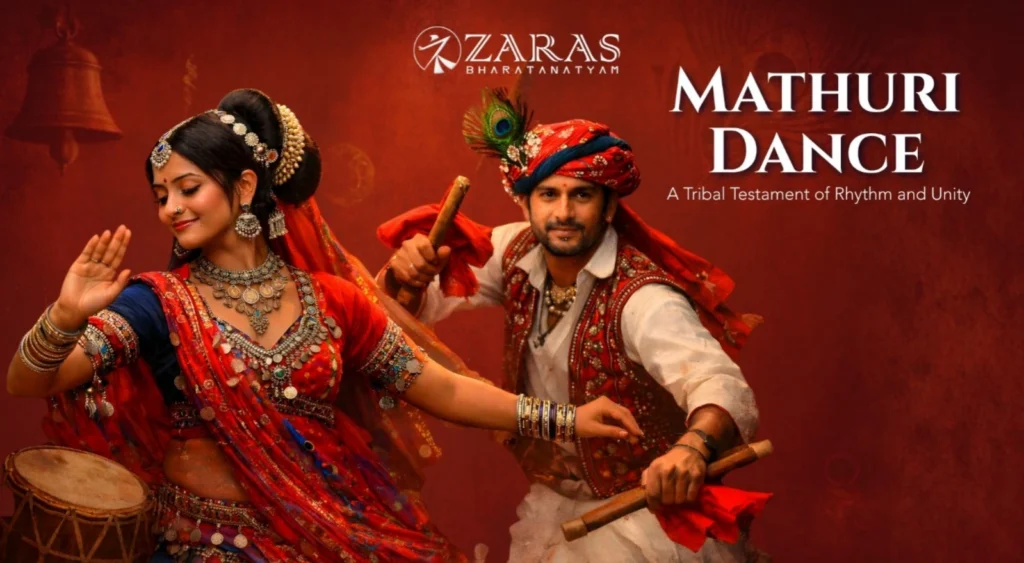
Mathuri dance is an art form that is obscured, unheard of,unfamiliar and little known. But ironically it does hold perennially and momentously significant stature among indigenous and vernacular art form. This art form is predominantly and cardinally staged by the koppu lambadi clan inhabiting the umji and Indraveli pastoral milieu in Adilabad district, Telangana. Their peculiar hairstyle which is marked by a bun or knot earns them the title koppu lambadi. This dance is typified by its elegance, charm, singular and outstanding cadence and syncopation. Its also Indissolubly and inextricably molded into the matrix of seasonal shifts and communal and ethnic life.
This name is behoovingly conferred and bestowed upon this art form in accordance and in tune with the occasion of performance. It’s customarily executed in the month of sravana in Hindu calendar venerating the magnificent spiels of Lord Krishna which germinated in Mathura. Mathuri is noteworthy for its male female combo performance which enchantingly, aesthetically, and artistically delineating, portraying and highlighting the social cohesion and solidarity within the clan.
Mathuri dance demarcates the stunning and striking polarity of effervescent and ebullient virility and equanimity between the masculine and the feminine. The female performers undulate and sway with a facile, delicate and premeditated rhythm and cadence, centering and riveting on exquisite strut and congruent manual maneuvering. Their gentle and calculated treading are rooted and elegant, accentuating the beat and recounting. As it is natural, the male artists display Virulous and acrobatic swift movements. In order to embellish the gesticulation they often implement a stick and handkerchief enhancing the rapidity of their kinetics.
The calculated and metrical coalescence of the male and the female engender an optically grandiose extravaganza. The dance is exquisitely and sophisticately exhibited on the holy and sublime feast of dushera and Krishna ashtami precisely and also during propitious and felicitous functions and ceremonies within the community.
The songs used in the dance emulsify and homogenize the gist of spiritual and the temporal. The integral orchestration plied comprises sutta, tasha or nagara, dappu. Mathuri dance costumes spotlight and call attention to gaudy and time honoured attires for both men and women. Women often bedeck in dazzling and emblazoning sarees or ghagra cholis with fascinating accessories such as heavy jewelry, mirrors and poise finery. Men dress up themselves with dothis, shirt furnished with peacock feathers, beads and turban.
The mathuri dance is staged not only for recreation and jubilation but it is a sanctum and reservoir of ethnic chronicle, social hierarchy and faith. The typical costumes and metrical and concise dance movements speak volumes about the koppu lambadi identity making mathuri dance dignified and special among the other lambadi art forms.